Helping e-commerce founders recover margin by auditing discount behaviour, inventory inefficiency, and operational drag — then translating that evidence into decisions that protect profitability, not just revenue.
Commercial thinking, analytical rigour, business-first conclusions
Most business data problems are not data problems. They are framing problems. Vague pain — "revenue is growing but profit isn't" or "we're losing customers and don't know why" — rarely arrives with a clean question attached. My work starts by translating that ambiguity into a precise, measurable analytical problem before a single query is written.
I specialise in commercial analytics for e-commerce founders and operators: margin audits, discount profitability analysis, inventory and operational risk, and customer value concentration. The emphasis is always on outcomes that inform decisions — not dashboards built for their own sake.
Case Studies
Certifications
MRR Leak Traced
End-to-end investigations into real business performance problems — from raw data to boardroom-ready conclusions
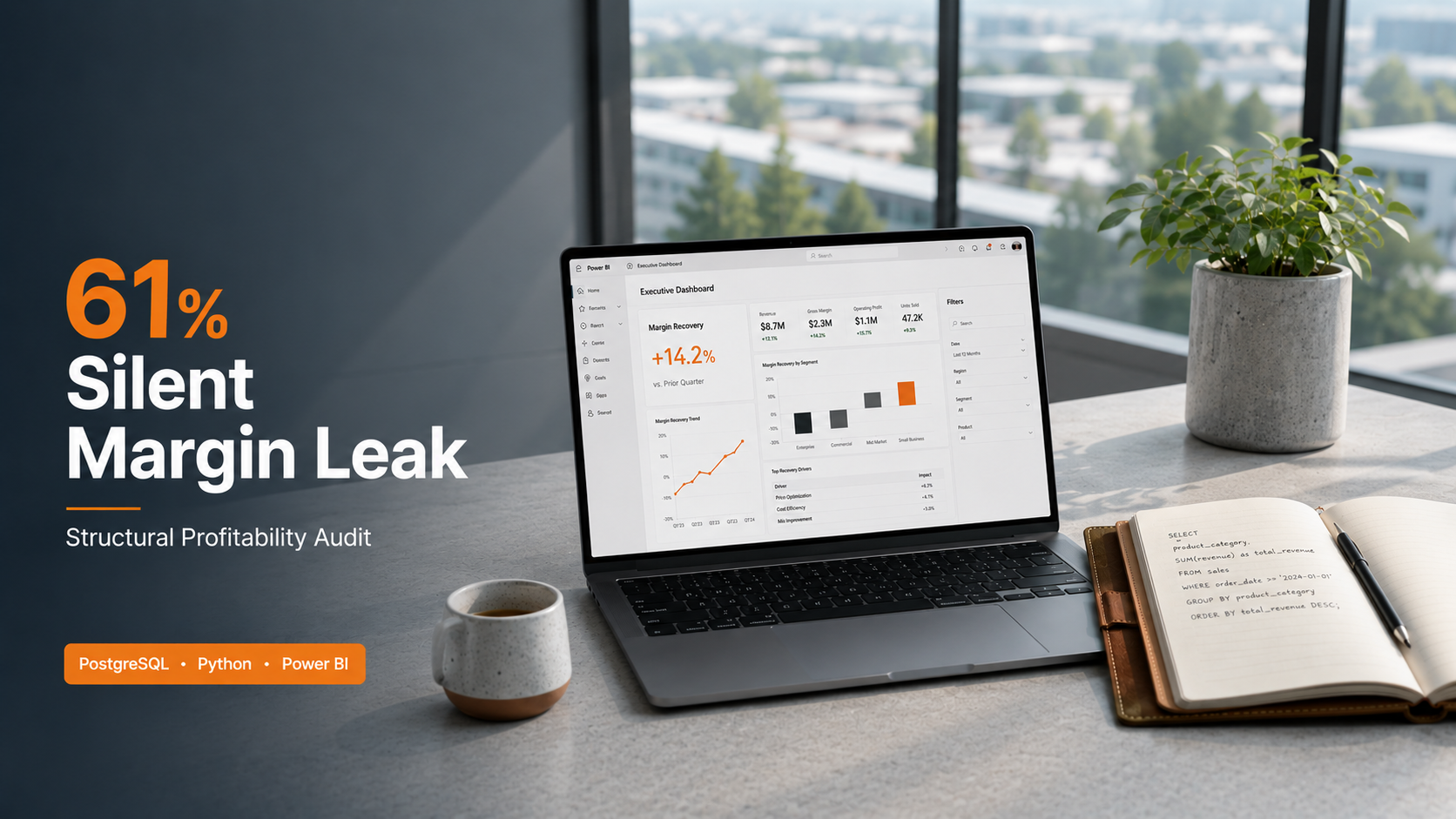
A full profitability and operational risk audit of a $35.2M e-commerce catalog spanning 180,519 transactions. Built across SQL data architecture, Python statistical validation, and a five-page Power BI dashboard, the investigation locates exactly which products, shipping tiers, and pricing habits are quietly converting strong revenue into weak or negative profit.
A multi-layer commercial audit investigating whether Contoso's discount strategy functions as a pricing lever or a structural margin destructor. Spanning SQL data architecture, Python behavioural analysis, and a Power BI audit narrative, the investigation surfaces exactly where discounting accelerates volume while quietly compressing profit.
Identified where subscription cancellations were concentrated across contract types, usage tiers, and customer segments. Built an end-to-end Python and Power BI pipeline using dimensional modelling to quantify which operational segments were destroying the most recurring revenue — and why month-to-month contract structures were the primary risk vector.
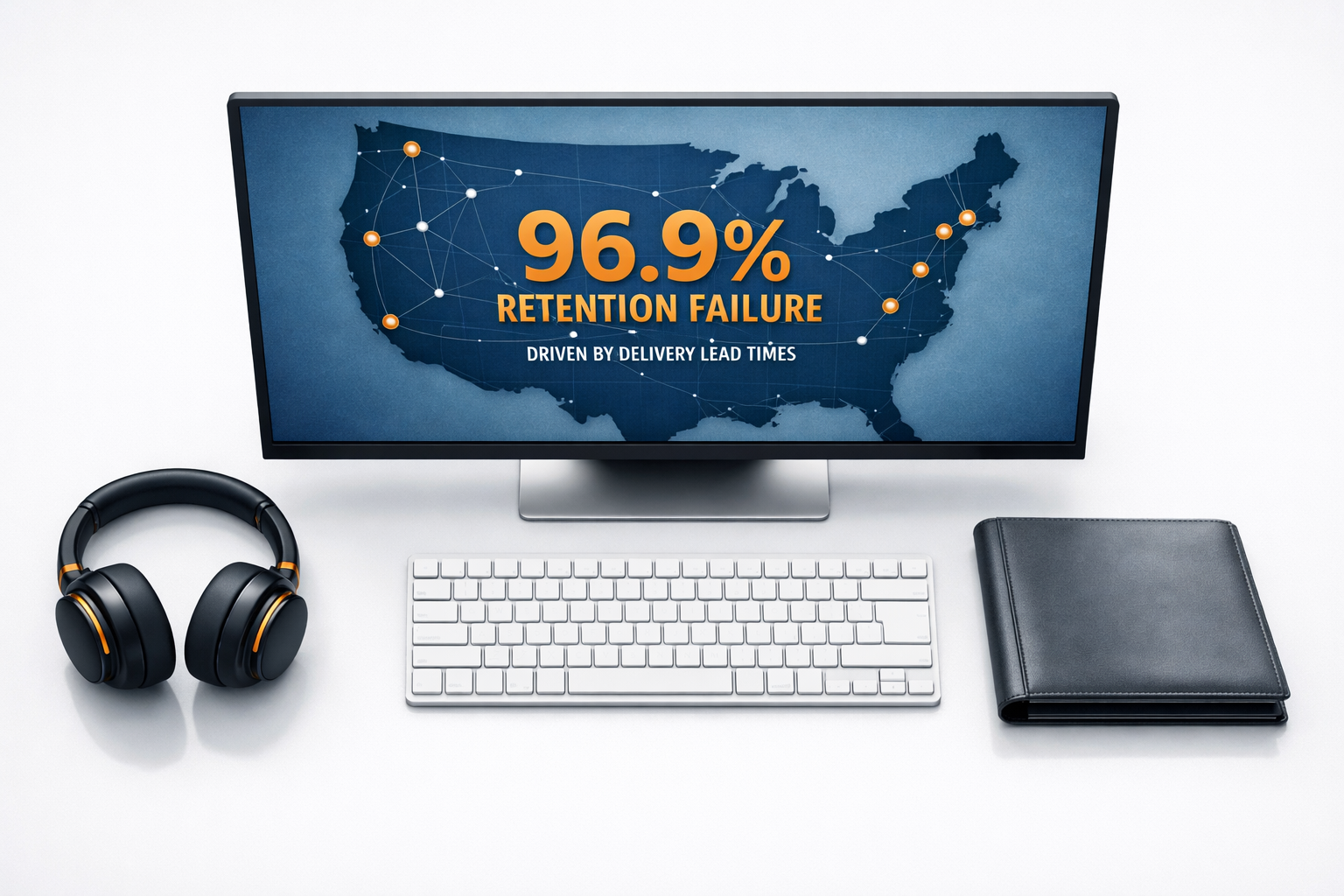
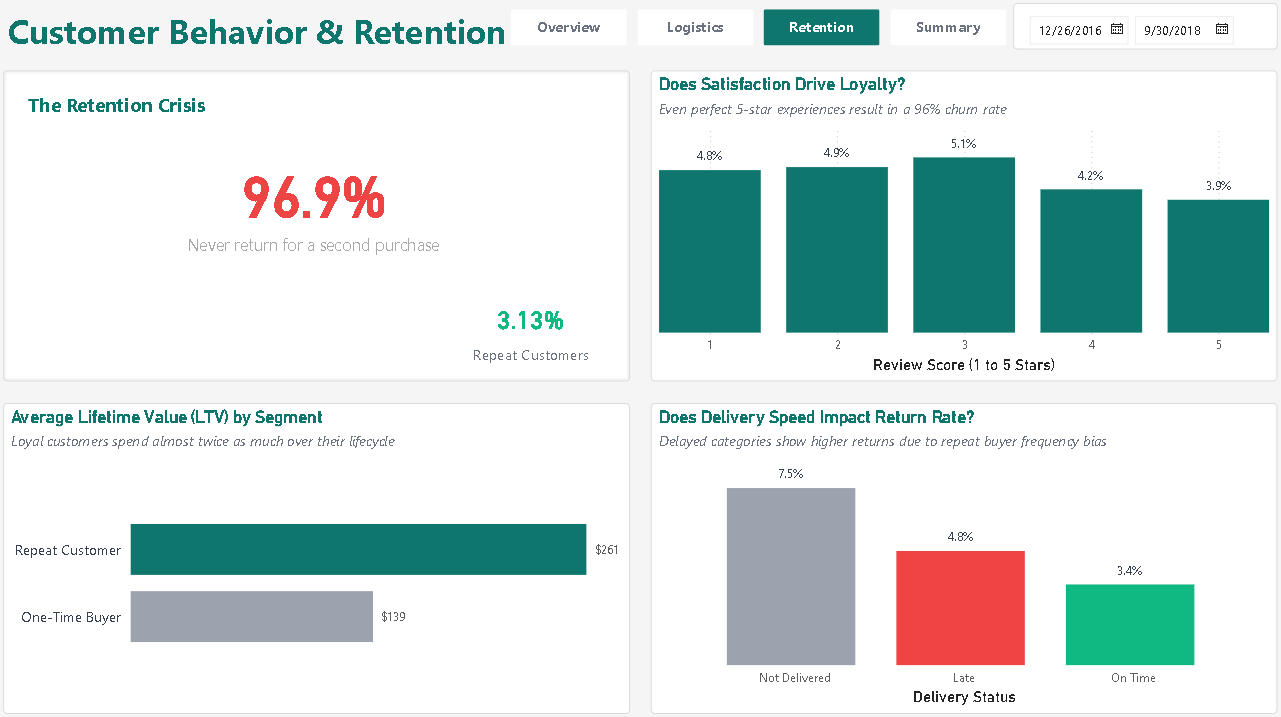
Root-cause investigation across 113K+ Brazilian eCommerce orders revealing that logistics failure — not pricing or product — was the dominant churn driver. Delivery delays directly correlated with zero repeat purchases, reframing the problem from a product question to an operations intervention requiring immediate fulfilment process changes.
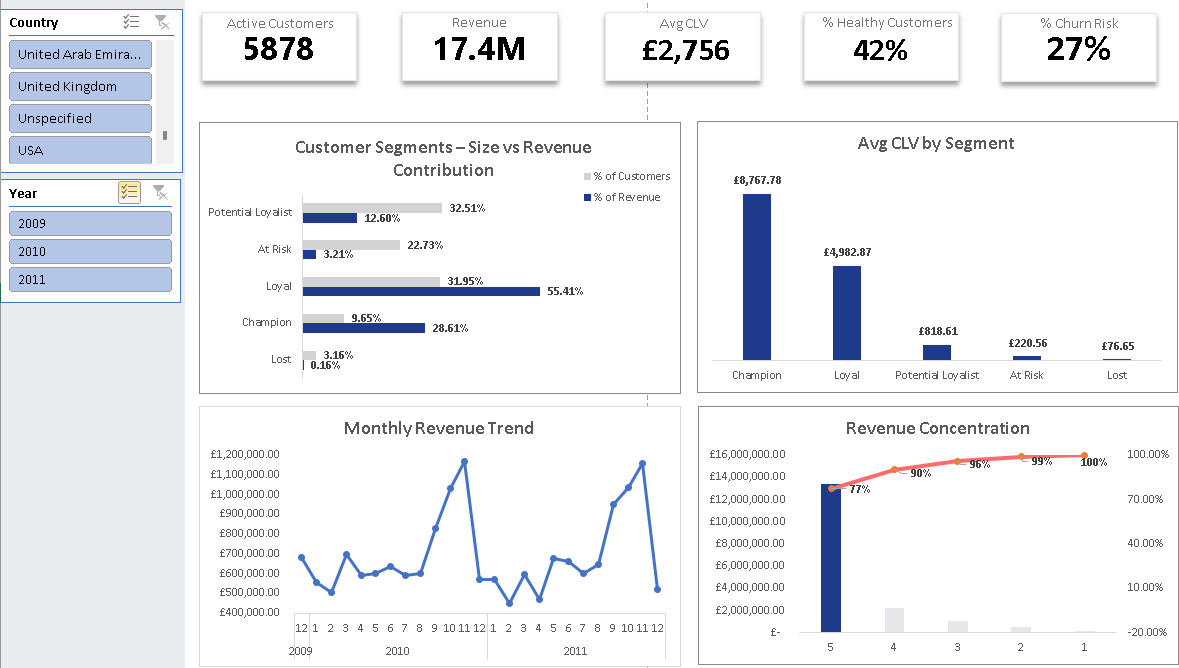
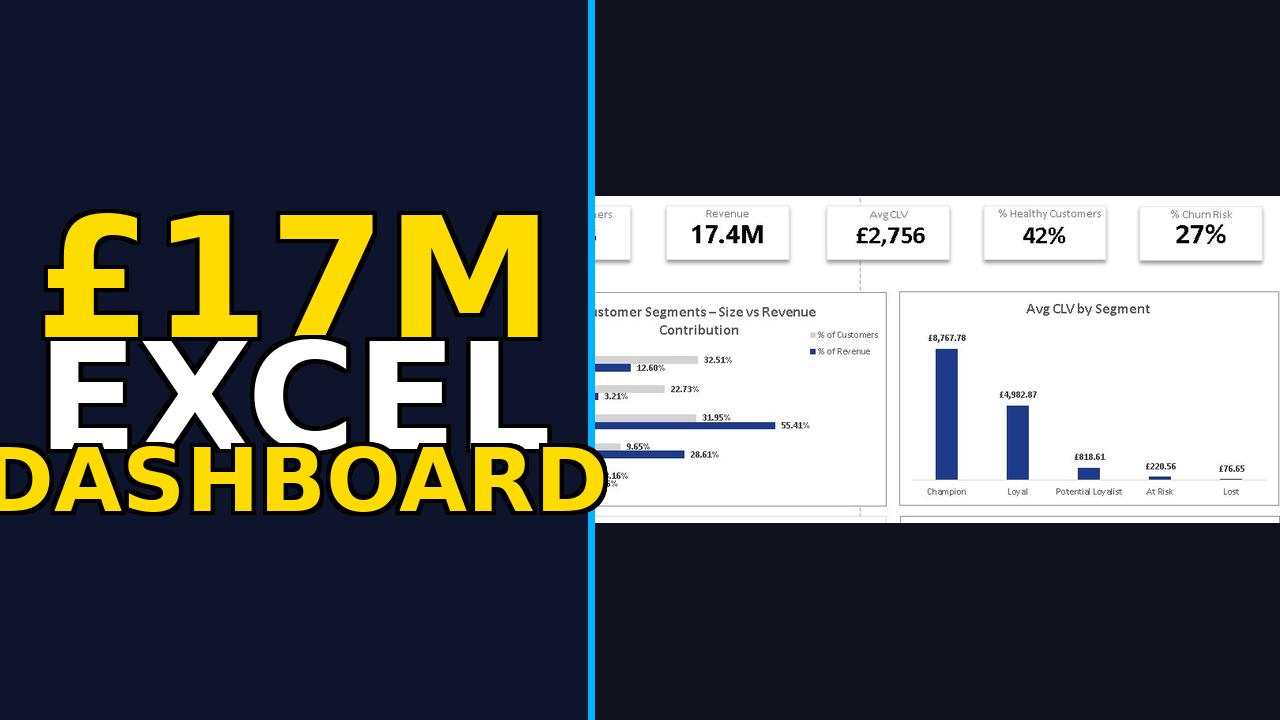
Analysed £17M+ in revenue across 1M+ UK retail transactions to surface the true concentration of customer value. Built a custom Power Pivot relational model with Power Query ETL to separate VIP behaviour from stagnant cohorts and quantify the revenue opportunity hidden in segment migration.
Analysed a multi-table retail database using advanced SQL — CTEs, window functions, and multi-level joins — to map where revenue was concentrated, which inventory positions represented fulfilment risk, and where the customer base had untapped upsell potential.
Replaced static Excel reporting with an enterprise-grade Power BI dashboard featuring dynamic YoY time-intelligence, cross-filtered regional breakdowns, and a visual hierarchy designed for boardroom-level decision-making — not data exploration.
"The logic applied in this audit successfully isolated a $97-per-line profit gap that was previously hidden in aggregate revenue reporting. By separating discounted from full-price transactions at the order line level, the analysis surfaced a structural margin compression — from 54% to 49% — driven entirely by unmanaged discounting habit, not market pressure. This finding was invisible at the category level and would have remained so under standard dashboard reporting."
Common patterns where standard reporting obscures the underlying business problem
Top-line growth can mask structural margin compression from discounting, customer mix shifts, or rising acquisition costs that don't appear in headline revenue figures.
High discount rates often inflate order counts while simultaneously training customers to never pay full price — creating retention that is entirely price-dependent and operationally fragile.
The actual driver is frequently operational — delivery failures, fulfilment inconsistencies, or logistics performance — and never surfaces in product analytics.
Aggregated CLV and ARPU figures hide extreme concentration. Knowing that 18% of your customer base generates 74% of profit changes every acquisition and retention decision you make.
What looks like a catalogue problem is often a single acquisition period or campaign cohort with structurally poor fulfilment performance.
Category-level margin reporting allows loss-making SKUs to hide behind strong performers. Profit destruction is almost always concentrated in specific product lines that aggregate data cannot isolate.
Structured engagements for founders and operators who need commercial clarity, not more dashboards
Each engagement is scoped around a specific business question. The output is a quantified finding and a set of evidence-backed recommendations — not a generic report.
Investigating where margin compresses between revenue recognition and net profit — across product lines, customer segments, geographies, and discount tiers. Built for operators who see top-line growth but stagnant or declining bottom-line performance.
Locating the exact fulfilment, product, or pricing stage where repeat purchase behaviour breaks down — separating operational root causes from product or pricing signals.
Decomposing an aggregated customer base into behavioural segments to surface the true concentration of revenue and lifetime value — isolating which cohorts to protect, upgrade, or deprioritise based on evidence rather than intuition.
Auditing whether a discount strategy is generating incremental profit or systematically compressing margin. Identifies customer-level discount dependency and models the financial impact of a pricing policy change before it is implemented.
Tracing operational and commercial gaps where revenue is generated but not fully captured — through returns, fulfilment failures, contract structure, or pricing inconsistency. Outputs a prioritised list of leakage sources with estimated financial impact per issue.
Designing and building Power BI reporting systems around the business questions that actually drive decisions — not vanity metrics. Built for leadership teams who need a single, trusted source of commercial performance intelligence with full drill-down capability.
Every engagement follows the same rigorous framework — from raw question to boardroom-ready recommendation.
Translate a vague business pain into a precise, measurable analytical question.
Problem StatementETL pipelines, deduplication, outlier handling — building a trustworthy single source of truth.
Clean DatasetSQL joins, Python aggregations, RFM scoring, cohort breakdowns — digging until a signal emerges.
Key FindingsPower BI dashboards and Seaborn charts designed for a non-technical executive audience.
Live DashboardEvery output ends with a £/$ figure — a specific revenue impact, not a vague "consider improving."
Revenue ImpactThe last step is non-negotiable. Any analysis that doesn't end with a quantified business recommendation is just a data exercise — not a decision tool. Every case study in my portfolio closes with a specific £ or $ figure for this reason.
Verified certifications from IBM and Google via Coursera

IBM · Coursera

IBM · Coursera

IBM · Coursera

Google · Coursera
Three fixed-scope entry points. One clear output: a quantified commercial finding and an evidence-backed recommendation you can act on.
A full-stack review of your transaction data to locate exactly where margin compresses between revenue recognition and net profit — across product lines, discount tiers, customer segments, and geographies. Built for operators who see top-line growth but declining bottom-line performance.
Identifying exactly when and why customers stop buying — isolating the lifecycle stage, root cause (operational vs. product vs. pricing), and the precise revenue-at-risk figure that justifies intervention. Outputs a cohort-level breakdown, not a generic churn rate.
Turning messy billing or operational data into a clean Power BI or Excel command centre — built around the business questions that actually drive decisions, not vanity metrics. Designed for leadership teams who need one trusted source of commercial intelligence.
Published breakdowns of real commercial analytics investigations — written for founders and operators, not data scientists.
A complete Python analytics case study on the Olist dataset — covering data engineering, memory optimisation, and RFM segmentation to determine whether a near-total churn rate was a product, pricing, or operational failure — and what that distinction means for intervention strategy.
Read on Medium
A breakdown of how processing 1M+ retail transactions via Power Query and a custom RFM segmentation model revealed that a small VIP cohort was generating 40x the lifetime value of mid-tier customers — and what a migration strategy could realistically recover.
Read on MediumAvailable for analytics consulting engagements, profitability audits, and commercial analysis partnerships
If your business is experiencing margin pressure, unexplained churn, or revenue growth that isn't translating to profit — that is exactly the kind of problem worth discussing. Reach out to explore whether an analytics engagement would surface the answer.